The Unraveling of Passions

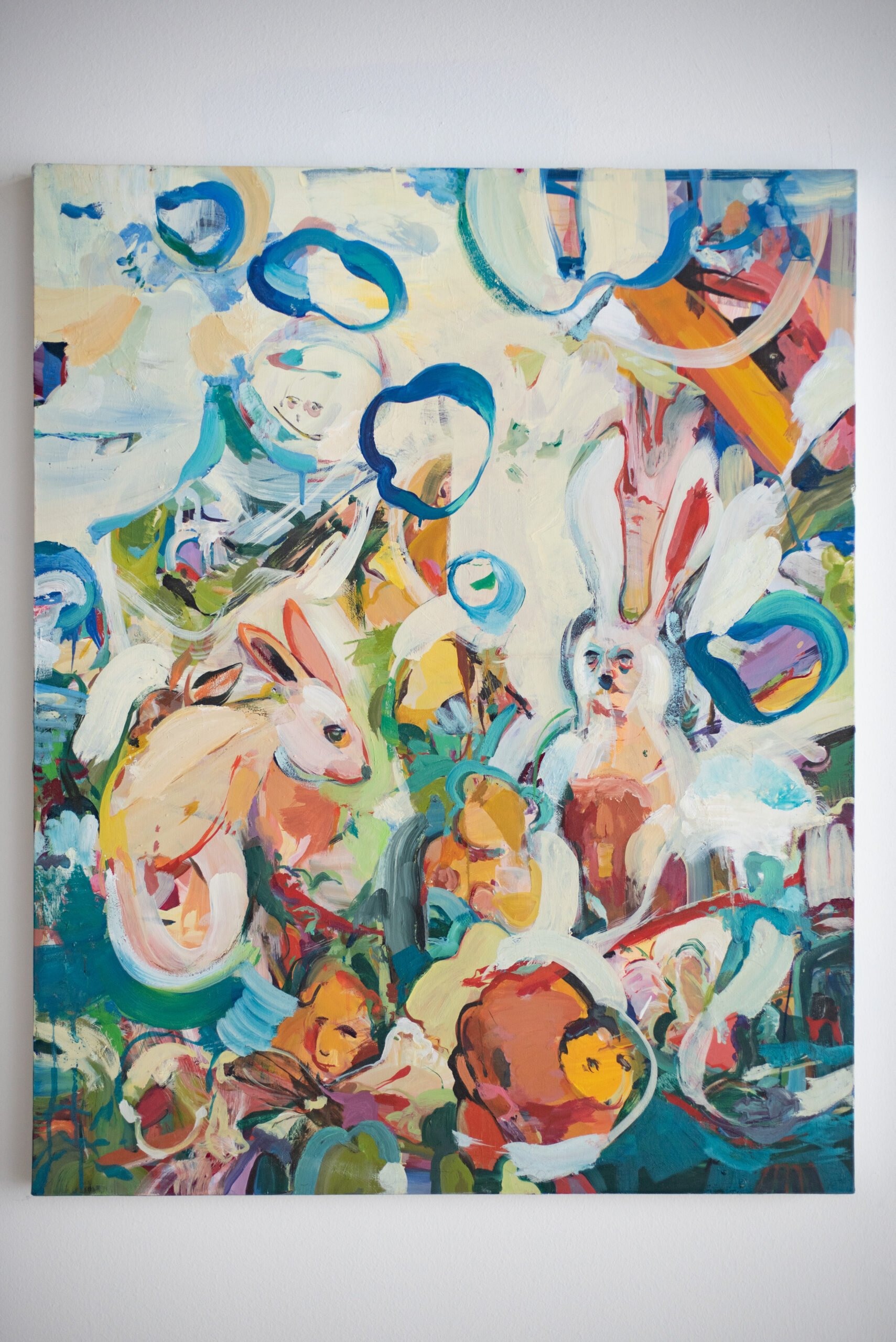
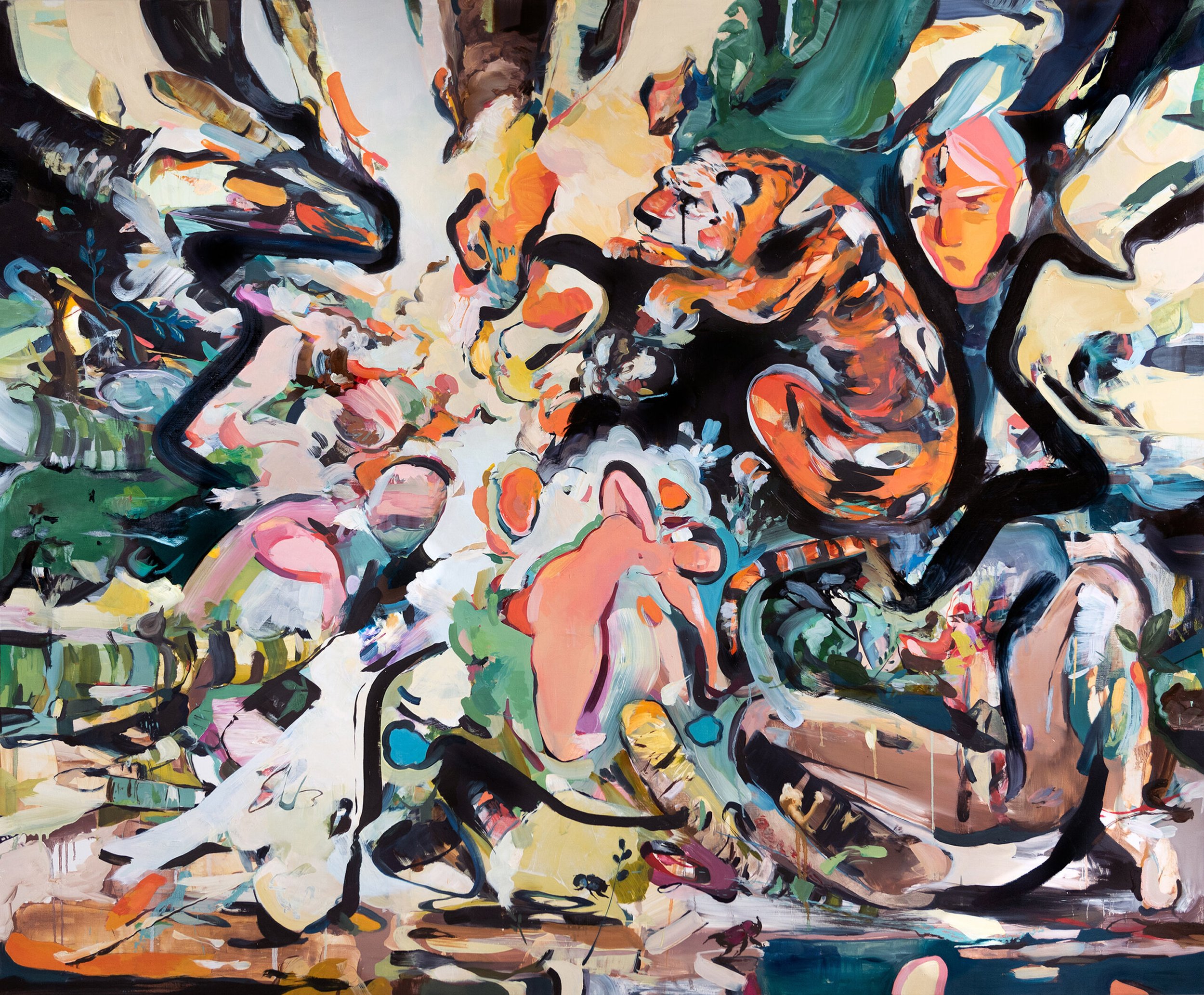
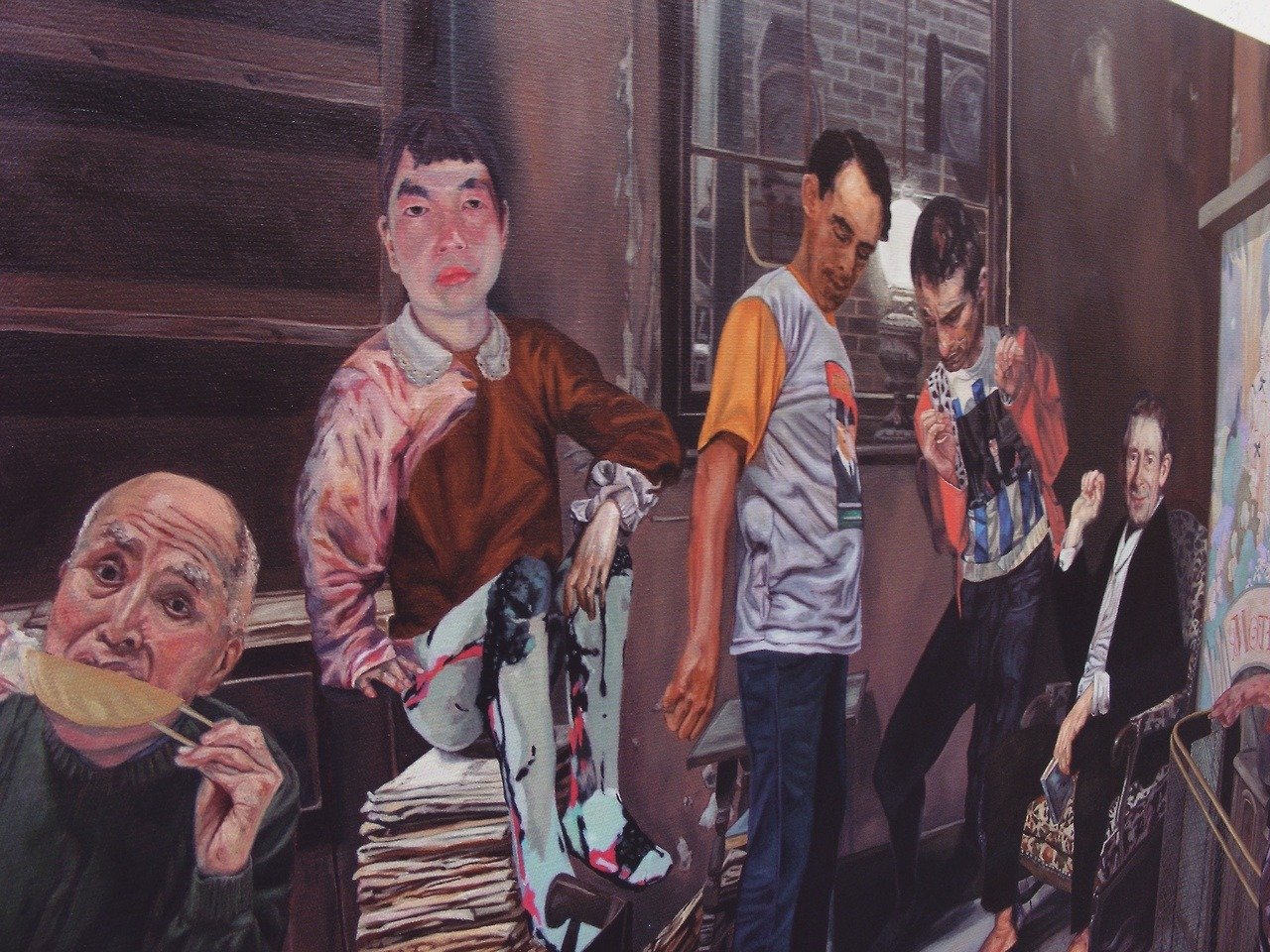
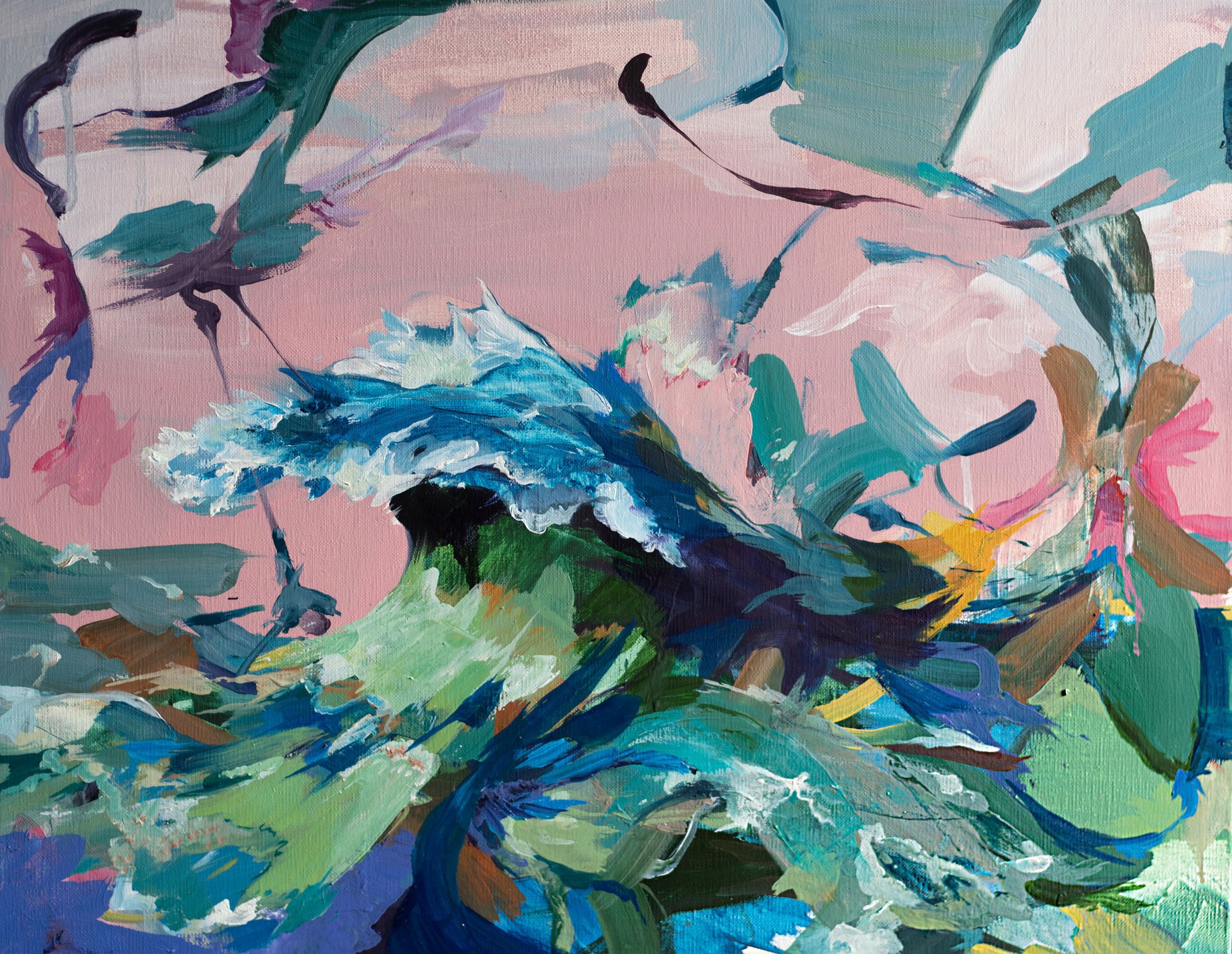
When art explores the vastness of the human condition, it is often the story and intention behind the work that support a piece’s success. Artist Eric Uhlir shares strong perspectives within one canvas when it comes to this stance. The Washington D.C. artist conveys his thoughts on humanity with such depth that it triggers an inner exploration of life, environment, history, and human action and interaction.


He explains, “The world a lot of my paintings inhabit is a reflection of our own. Human beings are incredibly bad at recognizing change over time, especially when it comes to our impact on the natural world. Growing up in LA, I was always fascinated by the city's sprawl, especially out toward the desert. It felt like people wanted to create their own little Arcadias, with these water attentive pools and lawns spreading as far as the eye could see. ”

An expandable technique

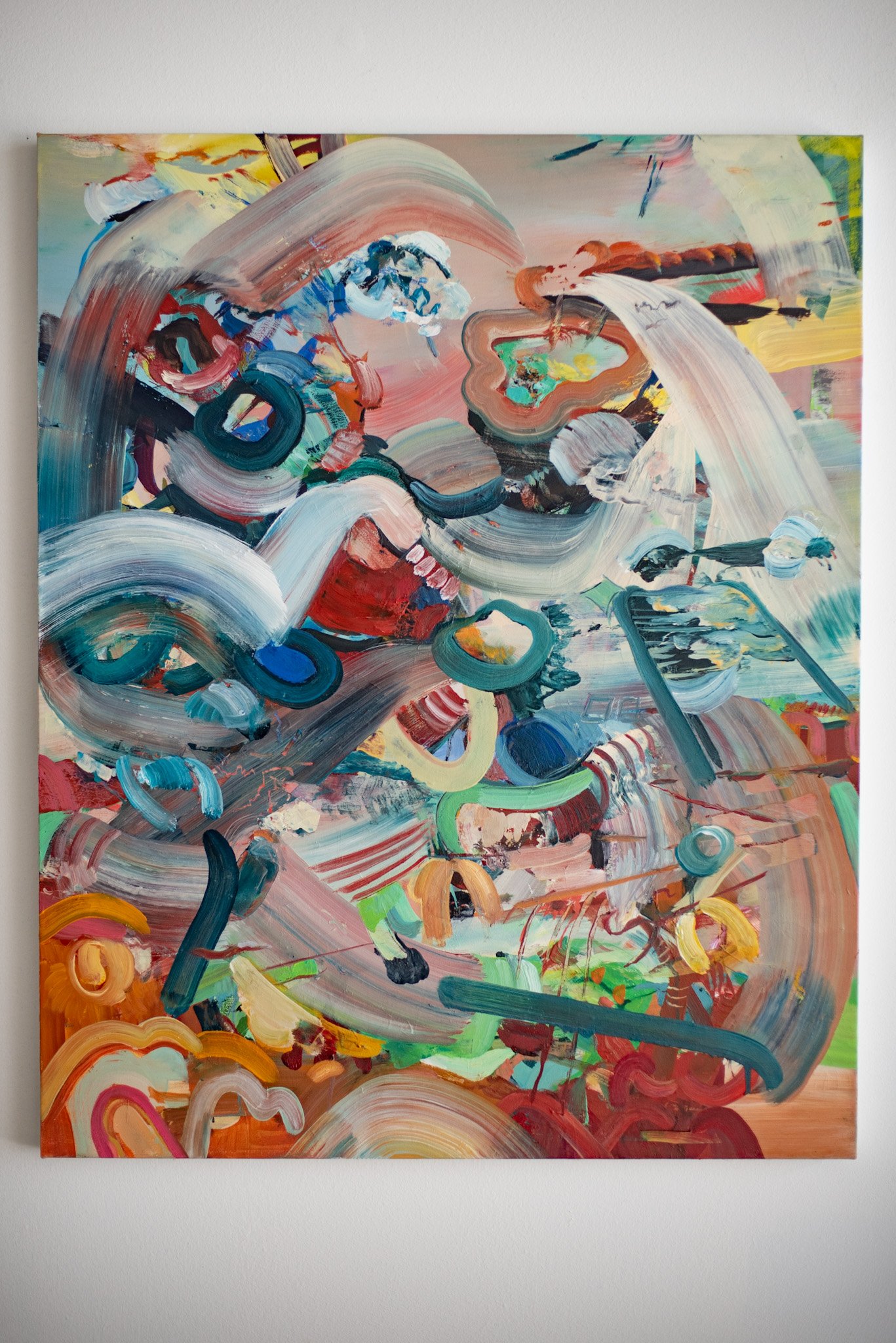
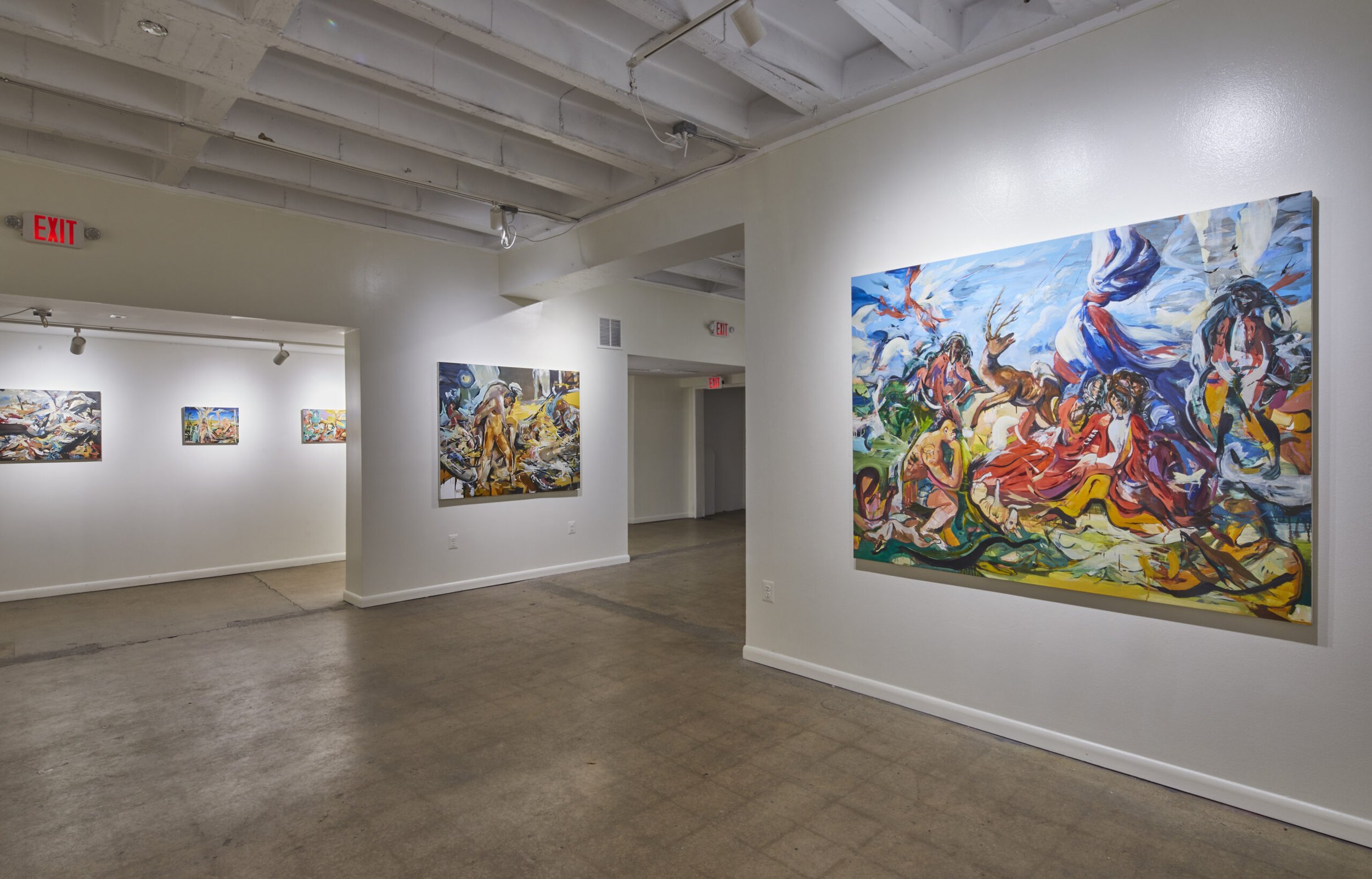
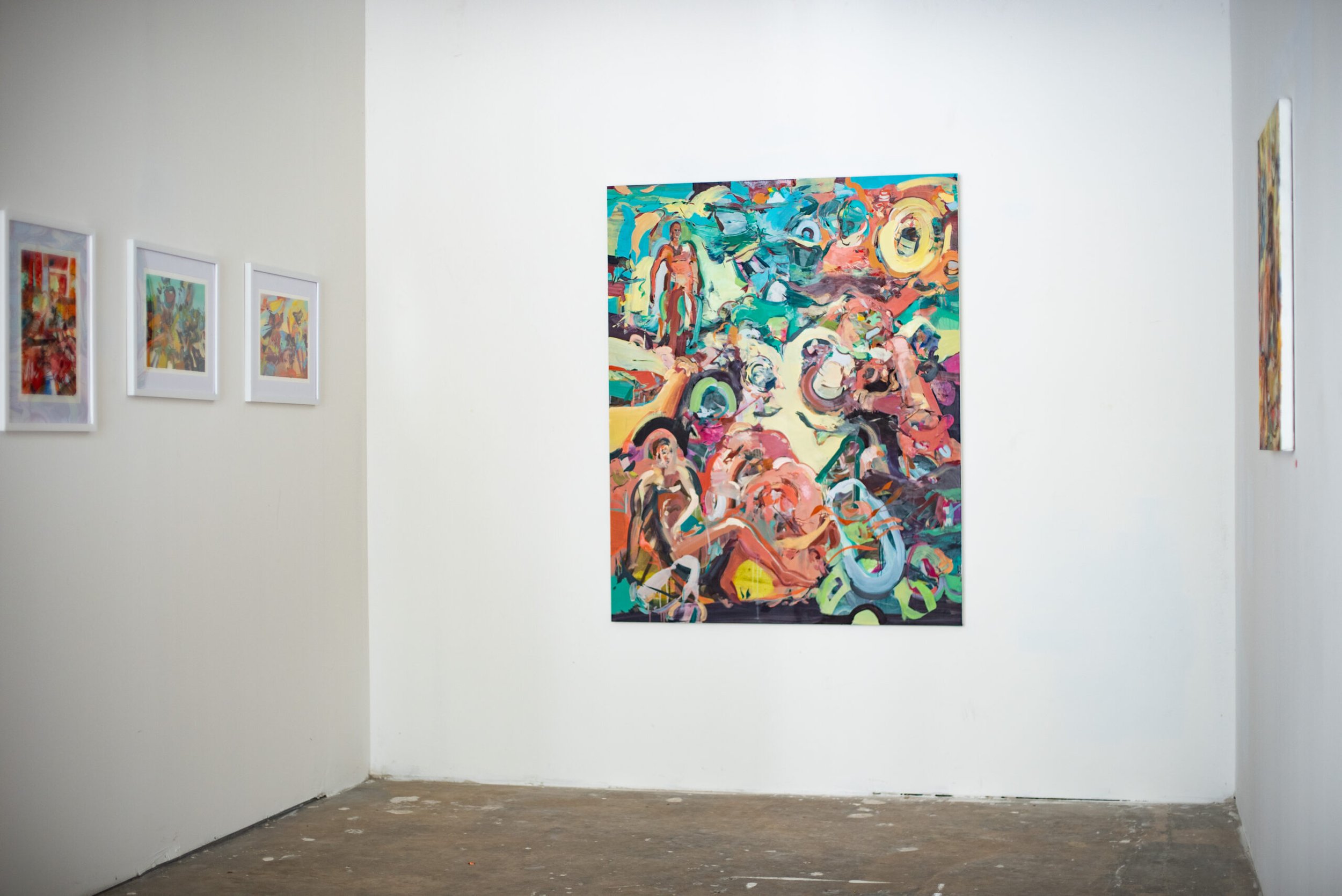
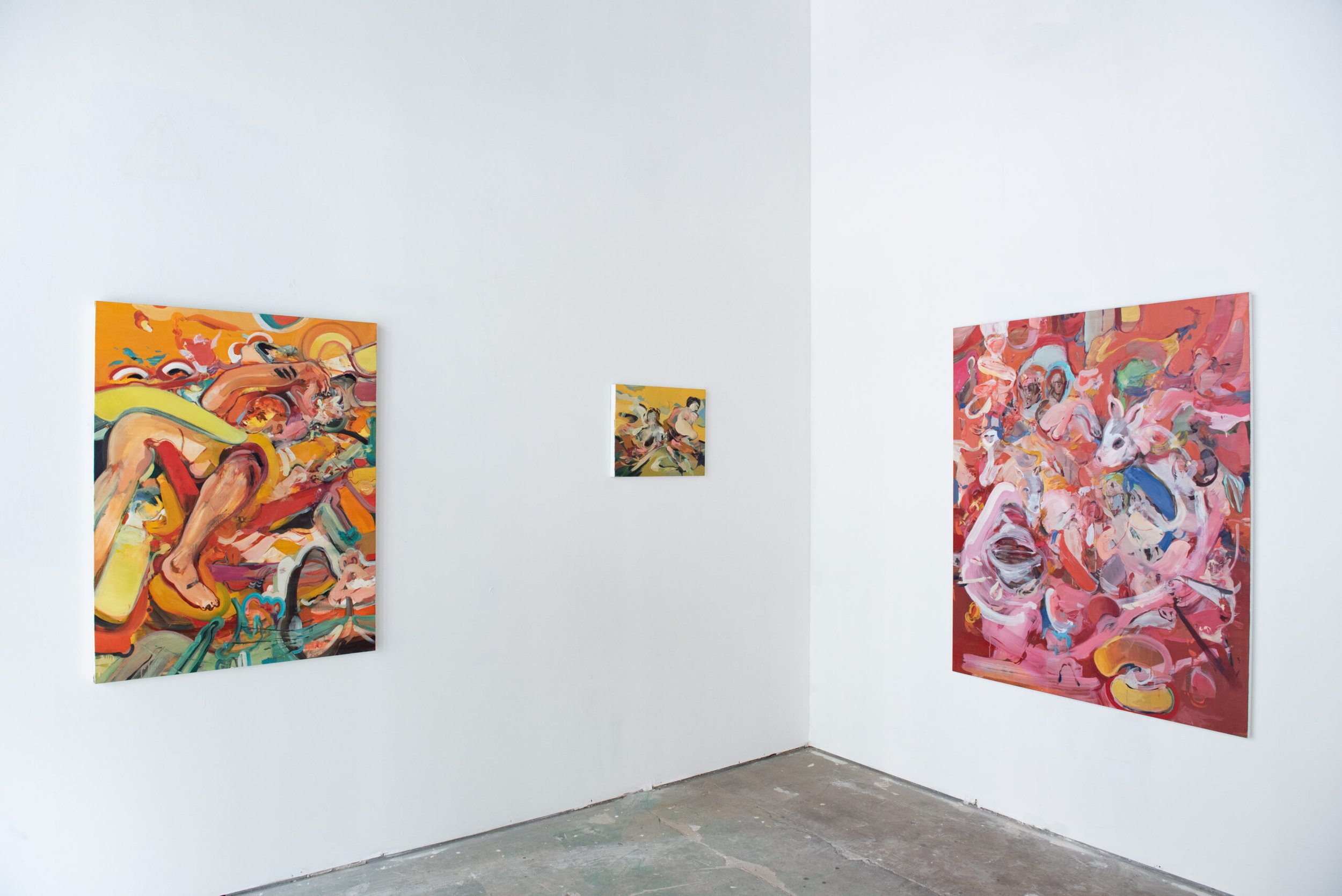
Uhlir’s work captivates through bold colors and movement. There is a dance between both techniques that almost distracts you from observing anything else much further, which is a good thing. It’s almost mesmerizing because this movement tends to cover the entire canvas in a swift manner. Even though there is a great amount of density underneath because of his technique, it is the movement that provides that hypnotic effect through seemingly repetitious curves that open up an entire landscape little by little, making it more intriguing. 

He shares:

“I think the palette is entirely due to my childhood in 1980s Los Angeles. The mix of pop culture, advertising, and the California sun imprinted a kind of high-key, full saturation view of the world. The mark-making and energy in each canvas are like a reward for the act of looking. The work I'm making now is very reference-driven, but the actual act of making each painting is highly spontaneous and intuitive. My inner vision is a constant conversation with both external references and the constant experimental studies I make.”

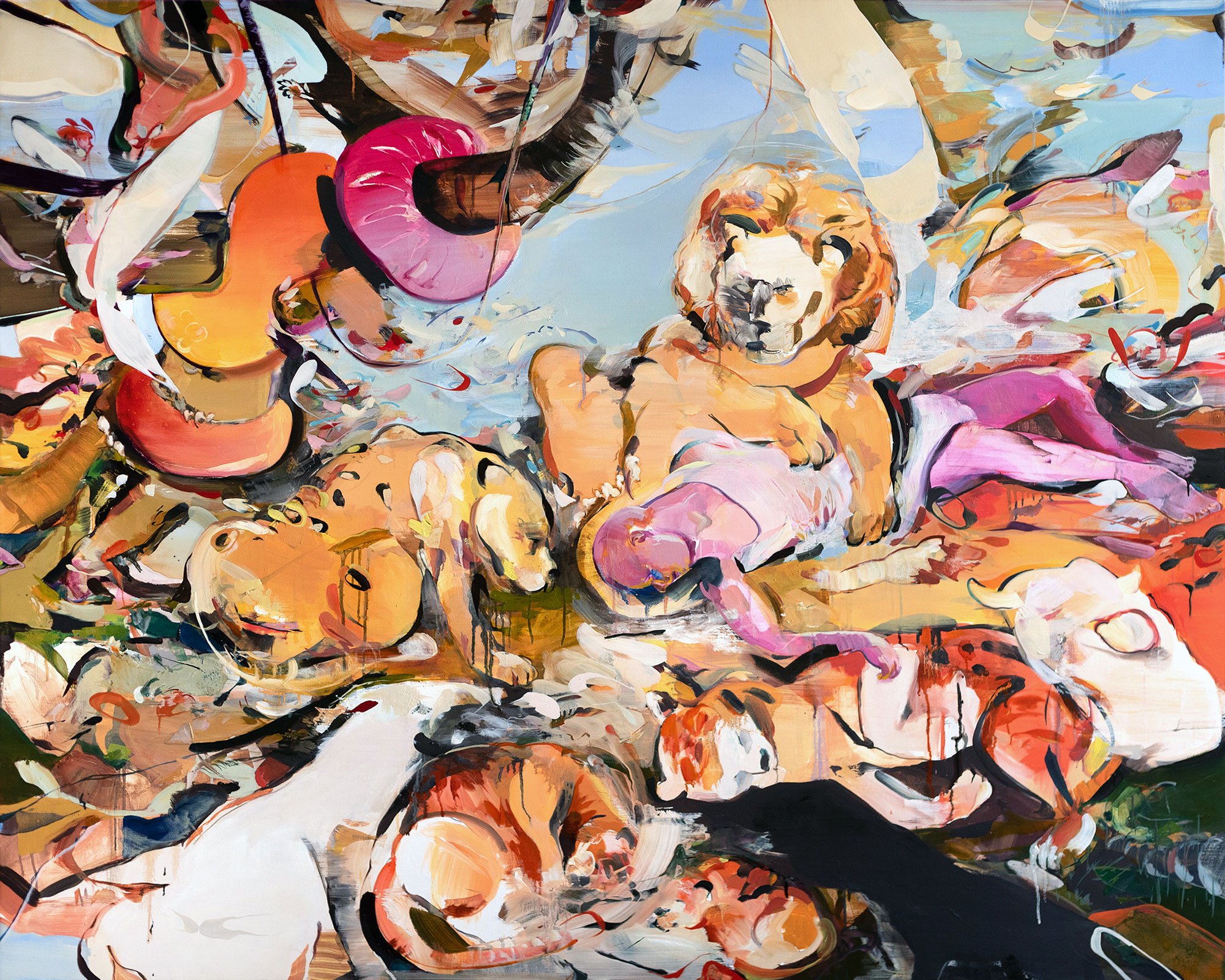
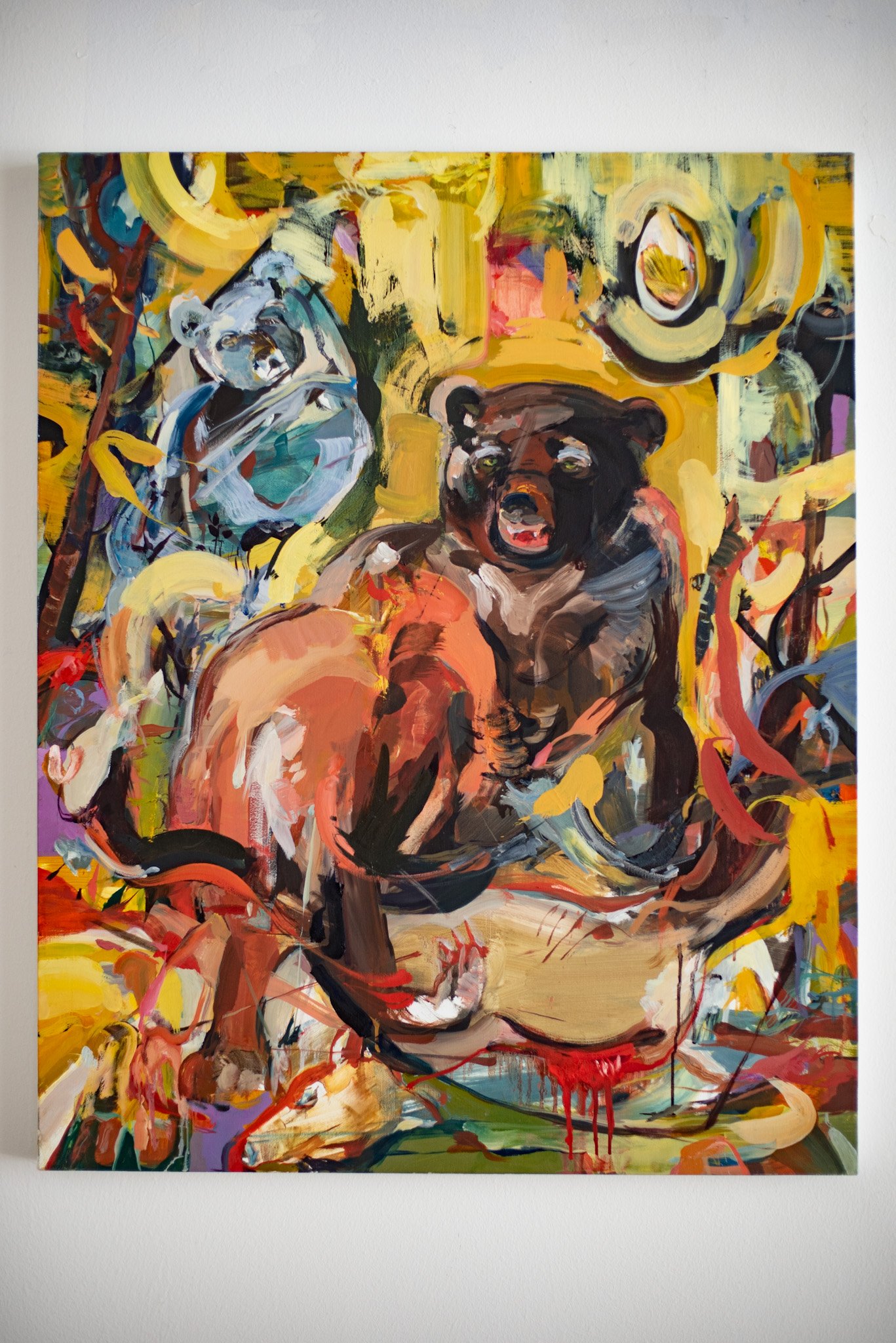
The work isn’t purely figurative, it plays with abstraction. It uses elements like almost abstract figures, transformative forms, gestural strokes, and infinite color blending for each shape represented. Uhlir’s work collectively achieves a magnified effect that persuades you to come face to face with what the painting may be saying to you at that moment. The vibrancy of color also captures what it is like to feel alive during specific moments. Each instance portrayed seems as important as the next. It is because, in Uhlir’s work, these moments are presented in a laser-focused manner through color and view, which then leads to the unraveling of deeper emotions and thoughts for the viewer.

He explains:

“Works on paper, water-based media, and drawings all float around the studio and settle into my subconscious, but the process is very much about the physical muscle memory learned from making marks. It's all very active and purposeful, I don't leave a lot of things hanging around as pure decoration in the paintings. My hope is to give the viewer so much visual information that they are compelled to come back to the work over and over to explore each mark and passage in the painting. I think this active, multi-session commitment to viewing is vital, and it's something we lose in the digital world. It's actually why I don't really make digital work, I want to give you an antidote for all the screens you have to stare at every day.”

On human vision

The way Uhlir uses the canvas has a strong sense of freedom, which stems from intuitive vision and skill. The need to fill up the entire space says something about the way he’s presenting the work to us. The space where his narrative exists feels big and all-encompassing within that frame, regardless of canvas size. You can find people, animals, nature, and scenarios that engulf everything depicted. When you look deeper, you see living beings portrayed through time and space so you can appreciate the complexities of our existence throughout history, and how far we’ve come from certain aspects or not.

This vision also showcases his view of life through a sense of energy and force, and perhaps that is where the movement comes into play. He is showing us that these living beings have their own force, their own agenda, and actions, and how they act upon these passions is up to each and every one of them. Yet the result of these forces affects the other beings, things, or places, which they encounter. Like the phrase, “every action has a reaction,” that is a fraction of the wholeness you encounter in Uhlir’s work, where this sentiment flows beautifully. 

He states:

“Art history forms the core references on which I build these almost history painting-esque tableaus. The world is kinetic and abstracted because that's much how we experience our own world, right?  More recent works, like "Unity and Division" based on Benjamin West's "Death of General Wolfe", take these structures and examine our own history through the lens of American art history, especially from the colonial era. Remixing paintings by West and others, like John Trumbull, helps me explore how our own experience intersects with these origin myths. It's why so many of the nature works involve references to painters like Gericault, Delacroix, and even Michelangelo. Despite hundreds of years of artists making work about the world, we still seem unable to adequately address systemic racism, environmental disaster, and conflict. Why is that? Do we take all of these images for granted? Can remixing and recontextualizing those original marks through my own lens render something meaningful? These are a lot of the questions I'm investigating through my main body of work.”


Concluding musings
Uhlir has a way of constructing complex narratives through his paintings so that they come alive, metaphorically speaking. They have so much to say when it comes to our reality and our humanistic way of acting. It is through the artwork that we face ourselves as humans, not just in the contemporary reality but from a lineage of humans who since the beginning of time have brought joyful moments into existence just as much as tragic ones. His work shows the human factor range so that we know who we are, where we come from, and taking all that into consideration, maybe we can figure out where we’re going individually and collectively. All while honoring the good and acknowledging the bad and learning from it all. While remembering that it is still magnificent to be alive and to explore existence in the best way possible. The artworks are a representation of our own humanity in a fantastical form. By stepping back we get a glimpse of how our actions and reactions can create waves of emotion, action, and change, and that is a power we shouldn’t ignore.

For more on Eric’s work, please visit his website.
Today’s poem aligns with the theme of human complexity, a concept found in Eric’s work:

The Fascination of What’s Difficult

BY WILLIAM BUTLER YEATS

The fascination of what's difficult

Has dried the sap out of my veins, and rent

Spontaneous joy and natural content

Out of my heart. There's something ails our colt

That must, as if it had not holy blood

Nor on Olympus leaped from cloud to cloud,

Shiver under the lash, strain, sweat and jolt

As though it dragged road metal. My curse on plays

That have to be set up in fifty ways,

On the day's war with every knave and dolt,

Theatre business, management of men.

I swear before the dawn comes round again

I'll find the stable and pull out the bolt.
Where the Wild Things Thrive

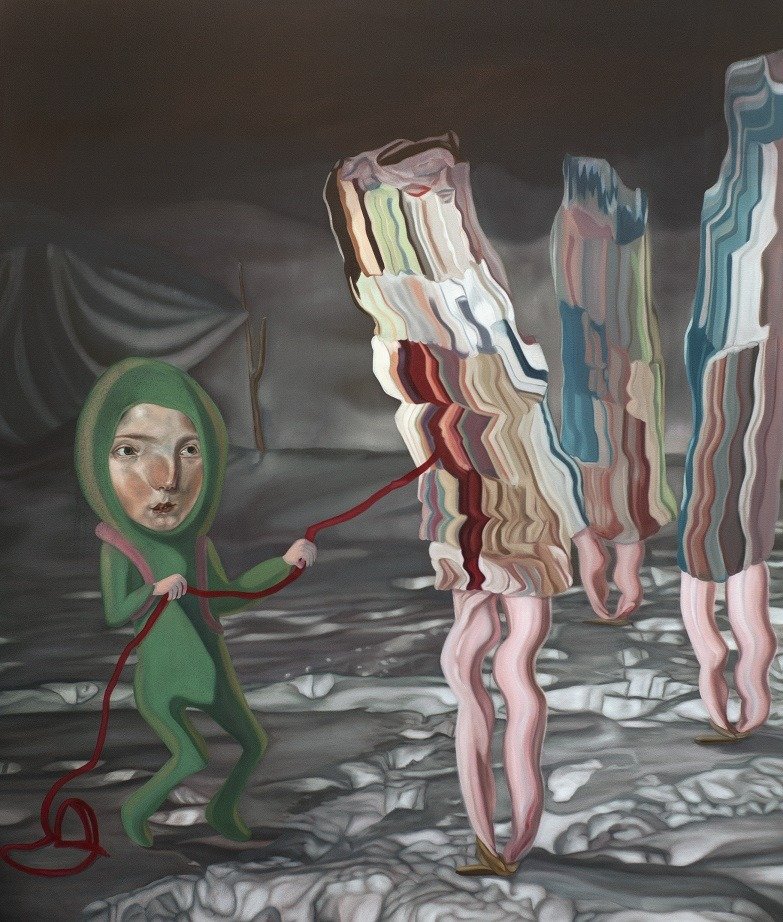
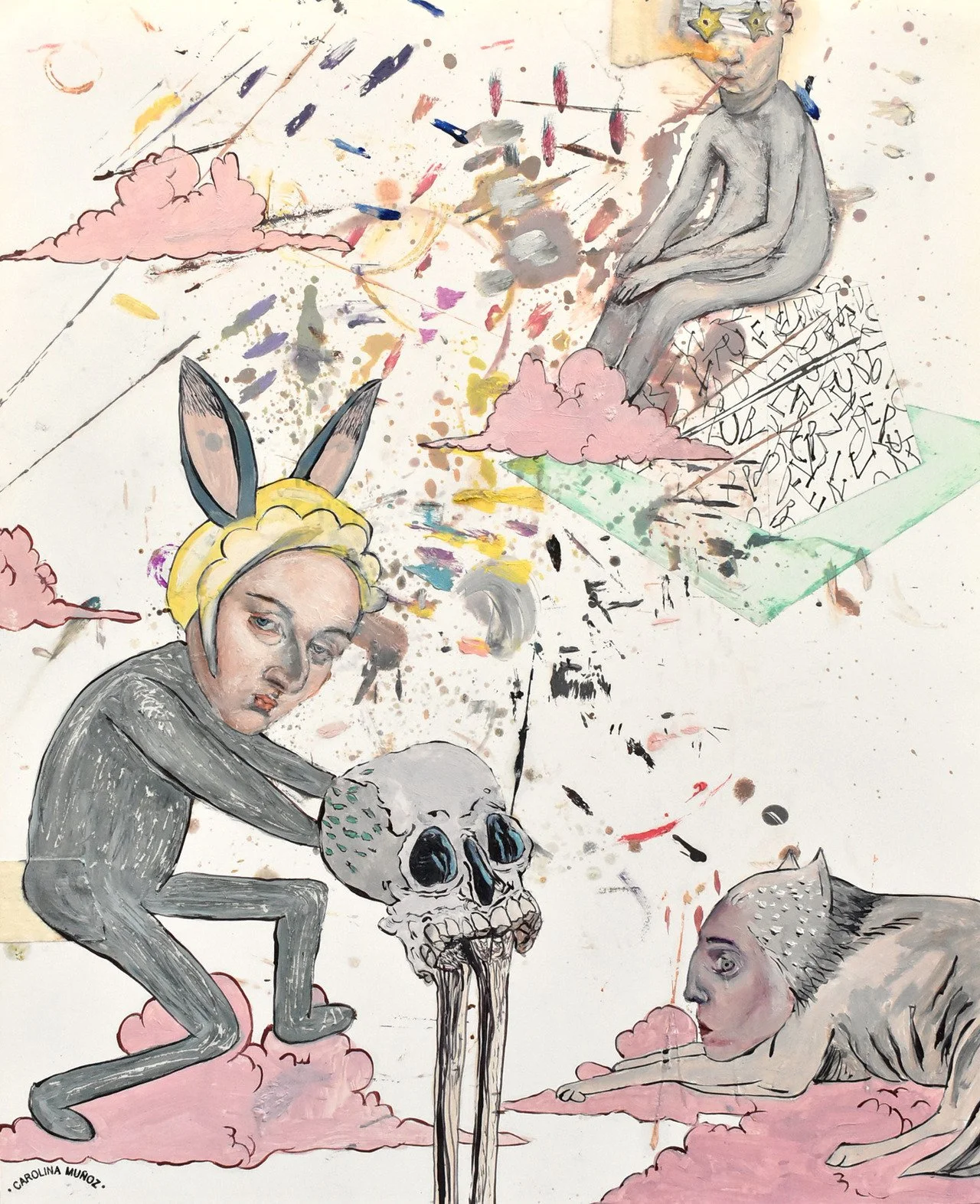
Artistic vision, nurtured authentically from inception can create a limitless vortex of ideas for artists. For Chilean artist Carolina Muñoz, this vision is captured by a world where anything is possible. A world where humanoid characters are mere components of a bigger purpose. Muñoz’s artwork shows us the potential of what can happen when we let our conscious thoughts collide with the dream-like reality created by our subconscious. You never know what you may find.

Technique

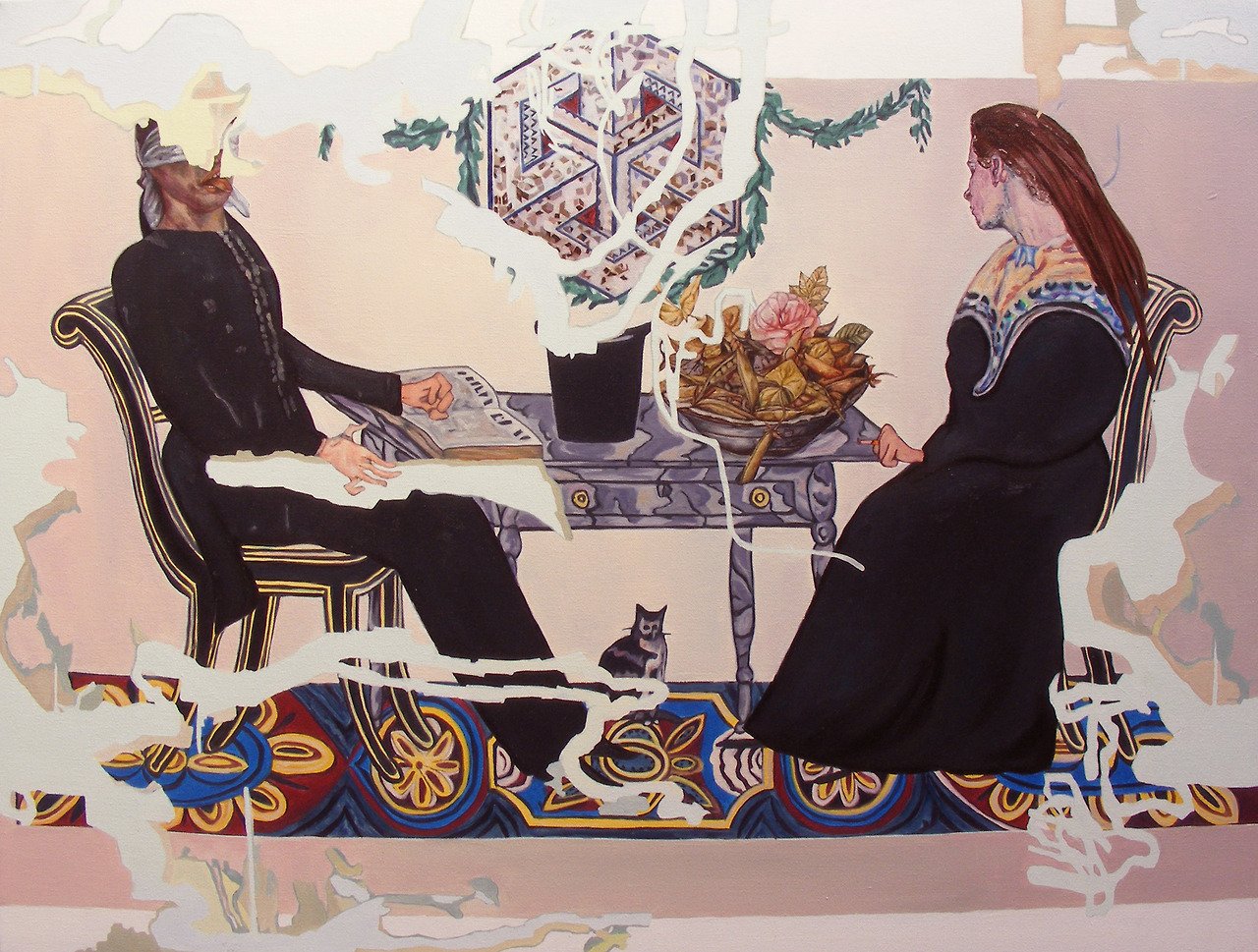
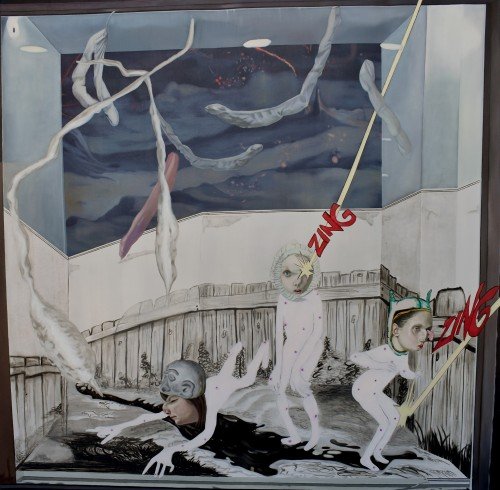
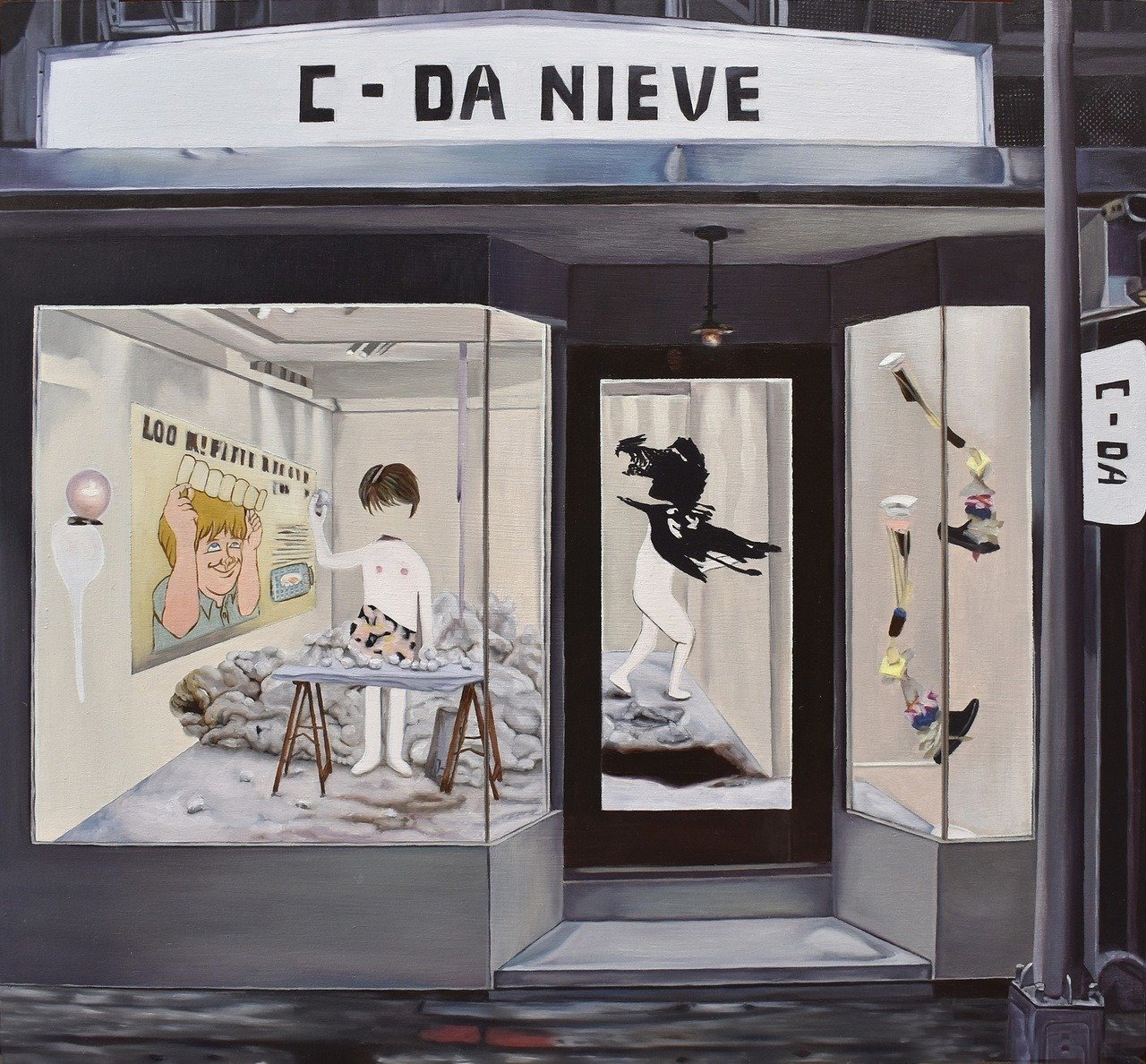
There’s a purpose in the way Muñoz’s works are put together and they all hold an immense amount of detail. In Serie Negros, we see a character that is up to something but within the painting, there’s more happening in his surroundings as he is nonchalant about it. Time appears to have frozen in the painting, yet there is a sense of urgency coming from the motion-like gestures you see. There are even inanimate objects with faces, as you’ll find in Cuarto de Censura (2019), and they are part of it too. Everything going on in the work itself serves like particles of this universe and she is the creator inviting you to see it all, leaving no stone unturned. She is exposing a moment that makes the viewer feel like they just walked into a compromising situation they can’t unsee, much like a dream, when you are present but everything else is already in motion, it’s happening now.

For Muñoz, creating is a transcendental experience. One that can overwhelm her with thoughts into the medium to create by dissecting each piece within the idea, one by one:

“One of the important aspects of the [creative] process is when I enter the state of thought, the principles of making the work or the series. I live around it, I can't stop thinking, it's quite exhausting and overwhelming. It is first like a mental experimentation that lasts days or weeks that later lands on paper; a sketch. There are times that it arises in one night. But it is a process where you fill in the information and then you have to sort and select. When you have the sketch, the rest begins to flow smoothly… I think that drawing is a good ally in the process, it helps to organize the mind. Sometimes, a few times, I also write, before making a piece, I read a lot of things or watch artists' documentaries. Seeing art motivates me a lot, it makes me want to work in the studio.”

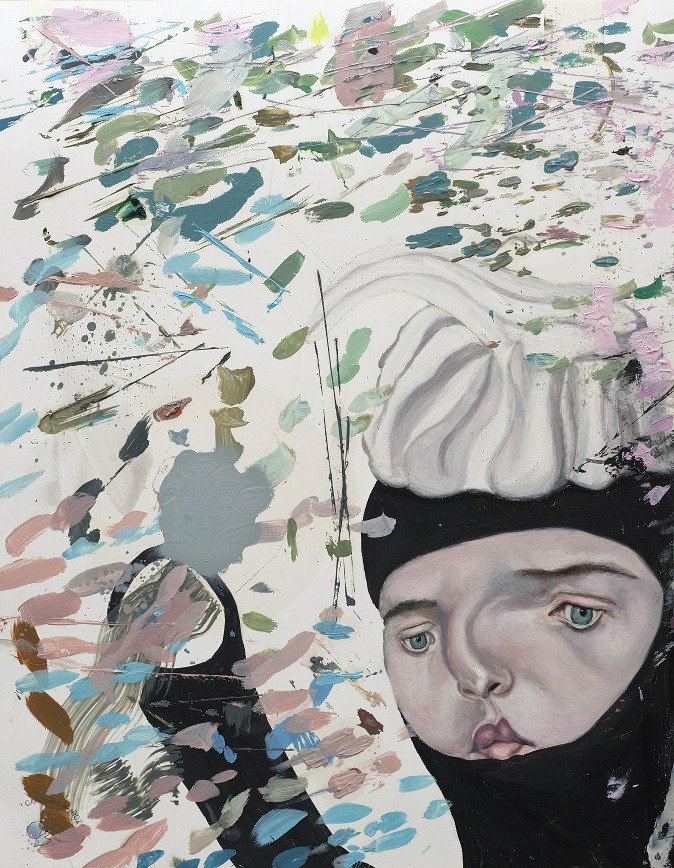
I very much enjoy the juxtaposition of the soft pastel colors in a harsh setting within Muñoz’s work. There’s a duality to her use of color and what she’s drawing or painting. The caricature-like drawings give the pieces a sense of child-like curiosity and mannerism that makes you look, only to find that what is being depicted is a very mature portrayal of the subconscious. I appreciate that Muñoz gives herself permission to cover the entire canvas to explore the complexity of drawing a whole scene encapsulated by a chaotic perspective through wiggled lines, realistic facial features, shock-like moments, and blurred-out visuals.

Muñoz explains how abstraction has recently played a part in her creations:

“My art changes and evolves due to the need to do work, one seeks to reach something that is not necessarily tangible, but rather the feeling that the work done has a projection or takes me where I want to go... For some time I have been looking at a lot of abstract art, the use of technique, color, and stain. It is difficult for me to conceive a work without thinking about the figuration, without thinking about the space and characters that make up a scene. In the last works, I worked on the abstraction contained in the form, within faces and bodies. I found it interesting that as the result of this, the characters were in a state of constant change, without one being able to determine or distinguish their identity and gender. The ambiguity in my work has to do with deformation, I think it is my way of abstracting.”

It is a beautiful way to use an abstraction that challenges the form itself to be contained within space. There is a sense of control that comes from that, like the need to tame something wild. By doing so Muñoz is challenging herself while applying a new concept that fits within her creative world, and that is what evolution in art is all about. 

Vision

The characters you see in Muñoz’s paintings are an enigma and they are bound to make you take a closer look. They remind me of characters you may see in fables, much more surreal, contemporary fables that is. But they look like characters you don’t forget because they tell you stories that can be uneasy and uncomfortable to hear at times, causing you to question reality itself, the light and shadow sides of all we see, including aspects of our own minds and narratives. 

Muñoz shares her vision on the role these characters play as essential components of her work:

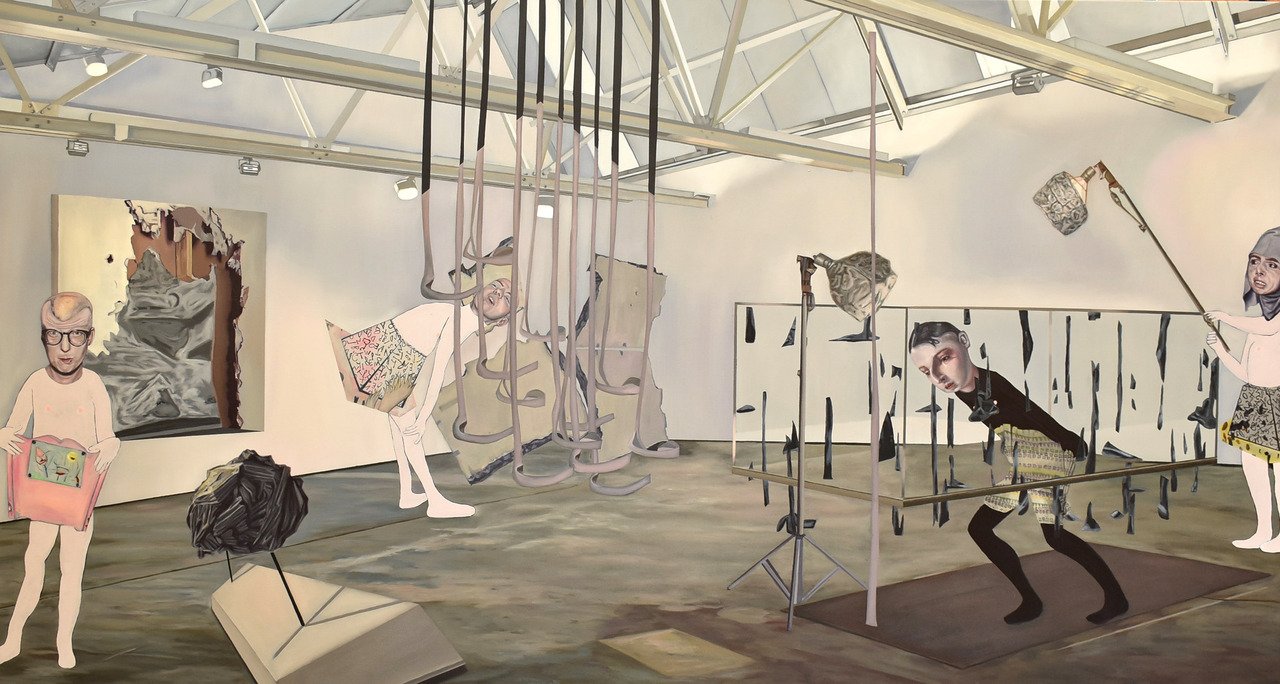
“The characters generally perform different functions, in a kind of submission. They are constantly performing. Many times they are inside exhibition spaces helping to convey an idea, sometimes confusing and questioning the viewer. I think that the characters can reveal deep human behaviors and the relationship we have with the world. I am interested in creating and sustaining a world of my own, with a certain type of character, living, existing in these settings that surround the formality of the art world. It is also as if they were trapped in the inertia of this aesthetic structure of art. Characters with crooked noses, creeping deformations do not rest.”

We all have secrets and parts of ourselves that we don’t like to show to the entire world, but deep inside our subconscious, we know they exist and are very much a part of who we are today or were in the past. Whichever the case, sometimes we suppress those aspects of ourselves so much until we can no longer contain them. That exact feeling of exposure and vulnerability is what reminds me of some of Muñoz’s paintings. In Mujeres del Espacio (2020) and Dia de Ofrenda (2019), we see how the characters are basking in their reality that is very much present and they are living in it, like an explosion of subconscious thoughts that are now in the open to be faced and dealt with whether you like it or not. 


Extra Notes

Muñoz is an artist whose vision evokes complex emotions within. The works allow for a constant need to observe and question not just through our personal realities but also of humanity overall. 

When I asked the artist about what she loves most about being creative, she responded:

“The freedom to do what you want, to work from your imagination. See reality from the most sensitive corners. Convey imperceptible aspects, answer questions with answers that at the same time generate questions, thoughts, and inferences. I like to give importance to things that in reality very few give their place. Like the incredible thing about the mechanism of dreams. Or question theories that we cannot understand and give space to create one of our own.” 

The artworks have an invisible sense of purpose, in which the characters are responding or acting to take on something bigger than them. It is that thought that confirms there are aspects we ought to pay attention to as humans since we have access to both conscious and subconscious realities. That nudge or intuition can provide knowledge about ourselves or the world, and this gives us awareness and understanding like a piece within a puzzle. 

Interview translated from Spanish. For more about the artist’s work, please visit her website.

Today’s poem reflects Carolina’s understanding of the real world and one of dreams:

Tulips

BY SYLVIA PLATH

The tulips are too excitable, it is winter here.

Look how white everything is, how quiet, how snowed-in

I am learning peacefulness, lying by myself quietly

As the light lies on these white walls, this bed, these hands.

I am nobody; I have nothing to do with explosions.

I have given my name and my day-clothes up to the nurses

And my history to the anaesthetist and my body to surgeons.


They have propped my head between the pillow and the sheet-cuff

Like an eye between two white lids that will not shut.

Stupid pupil, it has to take everything in.

The nurses pass and pass, they are no trouble,

They pass the way gulls pass inland in their white caps,

Doing things with their hands, one just the same as another,

So it is impossible to tell how many there are.


My body is a pebble to them, they tend it as water

Tends to the pebbles it must run over, smoothing them gently.

They bring me numbness in their bright needles, they bring me sleep.

Now I have lost myself I am sick of baggage ——

My patent leather overnight case like a black pillbox,

My husband and child smiling out of the family photo;

Their smiles catch onto my skin, little smiling hooks.


I have let things slip, a thirty-year-old cargo boat

Stubbornly hanging on to my name and address.

They have swabbed me clear of my loving associations.

Scared and bare on the green plastic-pillowed trolley

I watched my teaset, my bureaus of linen, my books

Sink out of sight, and the water went over my head.

I am a nun now, I have never been so pure.


I didn't want any flowers, I only wanted

To lie with my hands turned up and be utterly empty.

How free it is, you have no idea how free ——

The peacefulness is so big it dazes you,

And it asks nothing, a name tag, a few trinkets.

It is what the dead close on, finally; I imagine them

Shutting their mouths on it, like a Communion tablet.


The tulips are too red in the first place, they hurt me.

Even through the gift paper I could hear them breathe

Lightly, through their white swaddlings, like an awful baby.

Their redness talks to my wound, it corresponds.

They are subtle: they seem to float, though they weigh me down,

Upsetting me with their sudden tongues and their colour,

A dozen red lead sinkers round my neck.


Nobody watched me before, now I am watched.

The tulips turn to me, and the window behind me

Where once a day the light slowly widens and slowly thins,

And I see myself, flat, ridiculous, a cut-paper shadow

Between the eye of the sun and the eyes of the tulips,

And I have no face, I have wanted to efface myself.

The vivid tulips eat my oxygen.


Before they came the air was calm enough,

Coming and going, breath by breath, without any fuss.

Then the tulips filled it up like a loud noise.

Now the air snags and eddies round them the way a river

Snags and eddies round a sunken rust-red engine.

They concentrate my attention, that was happy

Playing and resting without committing itself.


The walls, also, seem to be warming themselves.

The tulips should be behind bars like dangerous animals;

They are opening like the mouth of some great African cat,

And I am aware of my heart: it opens and closes

Its bowl of red blooms out of sheer love of me.

The water I taste is warm and salty, like the sea,

And comes from a country far away as health.

Sylvia Plath, “Tulips” from Collected Poems. Copyright © 1960, 1965, 1971, 1981 by the Estate of Sylvia Plath. Editorial matter copyright © 1981 by Ted Hughes. Used by permission of HarperCollins Publishers.

Source: Collected Poems (HarperCollins Publishers Inc, 1992)

Art Spaces that Captivate

While easy enough to forget, the art experience really begins before we view any artworks. From the architecture and exterior of a museum, gallery or other art space, to the way we interact with the people working there, and how we are affected by the spaces that surround the artworks themselves. There are exhibitions that stand out in our mind as memorable, but have you asked yourself why? Beyond the works themselves, art spaces serve as the backbone for the exhibition. One of these great exhibition spaces is Glenstone Museum in Potomac, Maryland.

Water Court at the Pavilions Photo: Iwan Baan Courtesy: Glenstone Museum

Water Court at the Pavilions Photo: Iwan Baan Courtesy: Glenstone Museum

Glenstone is an example of what can be achieved when there’s an ability and flexibility to create an art space from scratch. Yet in this case, the interior and exterior building and landscape design matters just as much as the curated works found in its galleries. Planning the architectural design can be challenging on its own, as the space would not have the flexibility of changing like the artworks do.

Valentina Nahon, Sr. Director of Public Engagement at Glenstone, spoke with me about the importance of creating an impactful art space experience for all visitors. The Glenstone experience begins outdoors, the entry point to its sprawling 230 acre footprint. A natural growing field with small hills and distant trees reveals paths, each leading to the galleries or to outdoor sculptures, like Jeff Koons’ Split-Rocker or Tony Smith’s Smug. The sculptures are part of nature itself, where they fit seamlessly each adapted to their  own unique natural setting. You won’t find more than one together, unlike a typical sculpture garden. 

Jeff Koons, Split-Rocker, 2000 stainless steel, soil, geotextile fabric, internal irrigation system, and live flowering plants 37 x 39 x 36 feet © Jeff Koons Courtesy: Glenstone Museum

Jeff Koons, Split-Rocker, 2000 stainless steel, soil, geotextile fabric, internal irrigation system, and live flowering plants 37 x 39 x 36 feet © Jeff Koons Courtesy: Glenstone Museum

These outdoor spaces invite you to be curious about your surroundings, the sights and sounds, and even through the steps you may take, where small stones make sound as you walk. All these components cause you to be more present in the experience. Nature holds a space for each work you come across outdoors. One of my personal favorites is Janet Cardiff & George Bures Miller FOREST (for a thousand years…), where you are taken back in time through sound to reflect on humanity.

Nahon explains the purpose behind these art spaces:

Our mission at Glenstone is to be a place that seamlessly integrates art, architecture, and nature. The minimal design approach to both indoor and outdoor spaces is intended to facilitate meaningful encounters between our visitors and the artworks displayed, free of any distractions. The site design includes restored meadows, woodlands and streams to enhance the natural backdrop for outdoor sculptures, while the neutral building material palette complements the artworks on display.

When entering the galleries, the nature element persists, recalling the outdoor setting first experienced. The neutral wall colors, the large glass panels, and the water elements all embrace the landscape existing outdoors. The outdoor and indoor spaces interact heavily throughout the galleries, known as Pavilions. Beautiful natural light and high ceilings allow for this immersive effect in most spaces. There is a peace of mind from the mood-evoking surroundings that allow the visitor to explore at their own pace.

Installation View: Faith Ringgold From left: Faith Ringgold Jazz Stories: Mama Can Sing Papa Can Blow #1: Somebody Stole My Broken Heart, 2004 acrylic on canvas with painted and pieced border 81 in x 67 in ACA Galleries, New York Dah #3, 1983 acrylic on canvas 74 in x 58 in ACA Galleries, New York Dah #4, 1983 acrylic on canvas 74 in x 58 in ACA Galleries, New York California Dah #5, 1983 acrylic on canvas 110 in x 48 in ACA Galleries, New York California Dah #4, 1983 acrylic on canvas © 2021 Faith Ringgold / Artists Rights Society (ARS), New York, Courtesy ACA Galleries, New York Photo: Ron Amstutz Courtesy: Glenstone Museum

Installation View: Faith Ringgold From left: Faith Ringgold Jazz Stories: Mama Can Sing Papa Can Blow #1: Somebody Stole My Broken Heart, 2004 acrylic on canvas with painted and pieced border 81 in x 67 in ACA Galleries, New York Dah #3, 1983 acrylic on canvas 74 in x 58 in ACA Galleries, New York Dah #4, 1983 acrylic on canvas 74 in x 58 in ACA Galleries, New York California Dah #5, 1983 acrylic on canvas 110 in x 48 in ACA Galleries, New York California Dah #4, 1983 acrylic on canvas © 2021 Faith Ringgold / Artists Rights Society (ARS), New York, Courtesy ACA Galleries, New York Photo: Ron Amstutz Courtesy: Glenstone Museum

At times, some spaces open up fully as you walk in, like a surprise effect to expose the artwork within. It is almost like an unveiling of Glenstone’s most valuable assets, the art itself. That is in a way what galleries and museums are, they hold a space that reveals creativity in the form of Faith Ringgold, Cy Twombly, or Robert Gober, as something precious and frozen in time for the visitors to see. 

Nahon tells us about Glenstone’s creative team collaboration, responsible for this entire experience:

At Glenstone, we have a series of galleries that host changing exhibitions, while others are purpose-built to house a particular artist’s work. Planning a new exhibition is a collaborative effort that begins with the artist’s vision. We have a group of talented associates with varying backgrounds and experiences that contribute to the realization of a new installation at Glenstone.

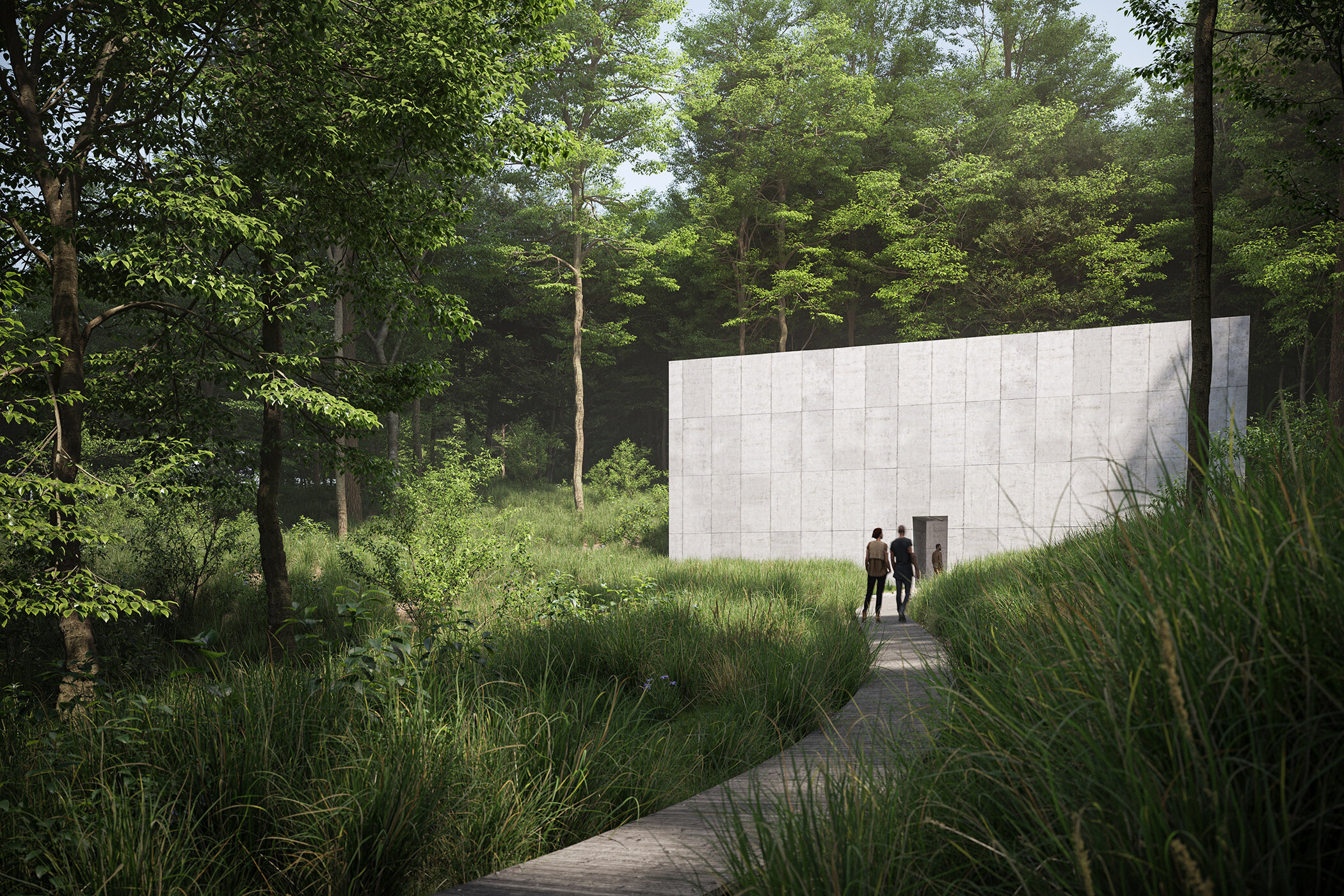
Rendering of the boardwalk approach to the new building at Glenstone Museum, conceived to house a large-scale Richard Serra work and designed in collaboration between the artist and Thomas Phifer of Thomas Phifer and Partners. Located on Glenstone’s Woodland Trail, with landscape design by Adam Greenspan/PWP. Image: The Boundary Courtesy: Glenstone Museum

Rendering of the boardwalk approach to the new building at Glenstone Museum, conceived to house a large-scale Richard Serra work and designed in collaboration between the artist and Thomas Phifer of Thomas Phifer and Partners. Located on Glenstone’s Woodland Trail, with landscape design by Adam Greenspan/PWP. Image: The Boundary Courtesy: Glenstone Museum

This collaborative vision is necessary in all art spaces. It allows for an immersive experience that starts from the outside all the way to the core, the artwork. Spaces can adapt to the artists and their artworks, but I think it really has to be the other way around for it to create balance among the space that has already been created and what the artworks have to offer. Then, it is when the art is placed that the footprint of the space transforms to become one with the space according to its message, how interactive it is, and how the viewers respond to it.