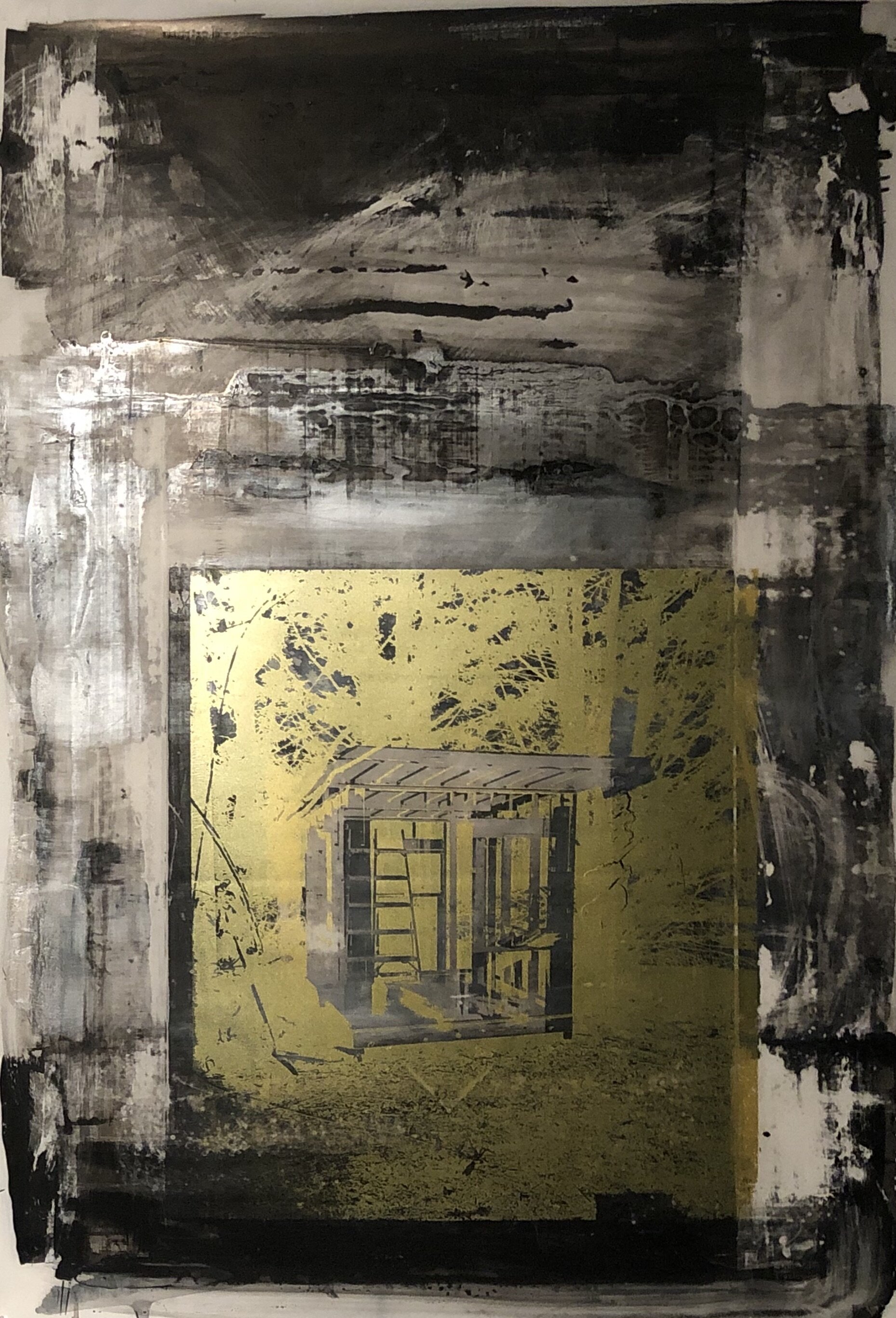
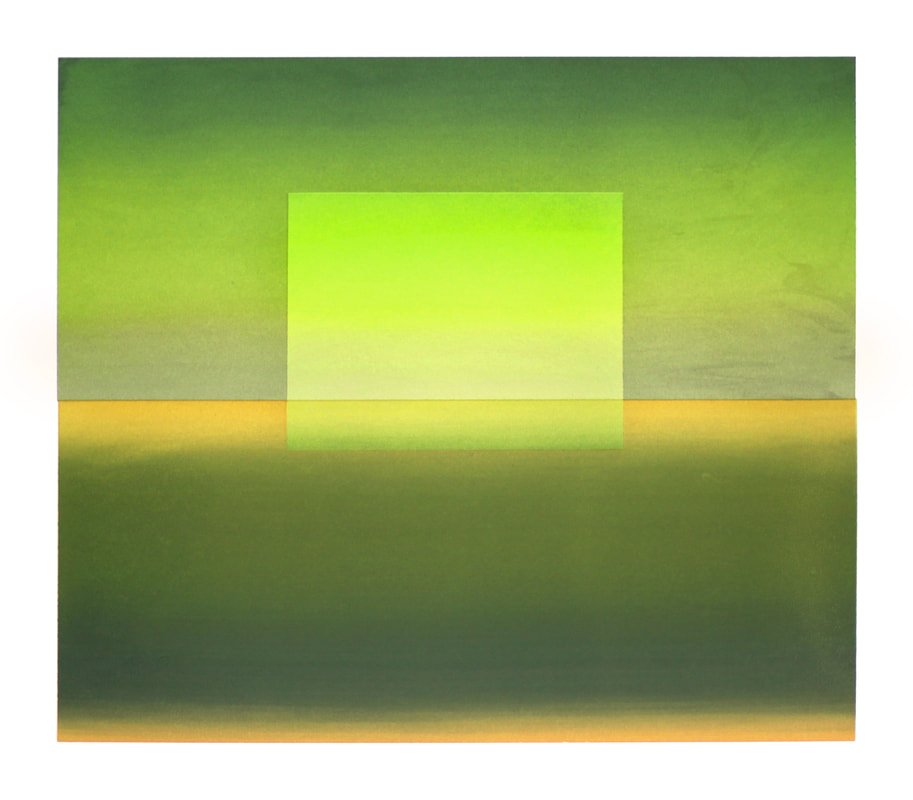
For artist Yuko Adachi, art transcends the reality in which we live. She creates from the depths of her spiritual understanding and translates those messages into her artwork. Creativity is unique for every artist, and that is what makes each process a fascinating void in understanding how art is created, as well as how it is interpreted and received by the viewer. For Adachi, the process of art creation comes from beyond what the eye can see. It comes from beyond simply getting inspiration from a tree or a landscape; it digs deeper and also connects to the unseen realms or liminal spaces that we, as humans, all have access to if we want to explore that metaphysical reality.
Process

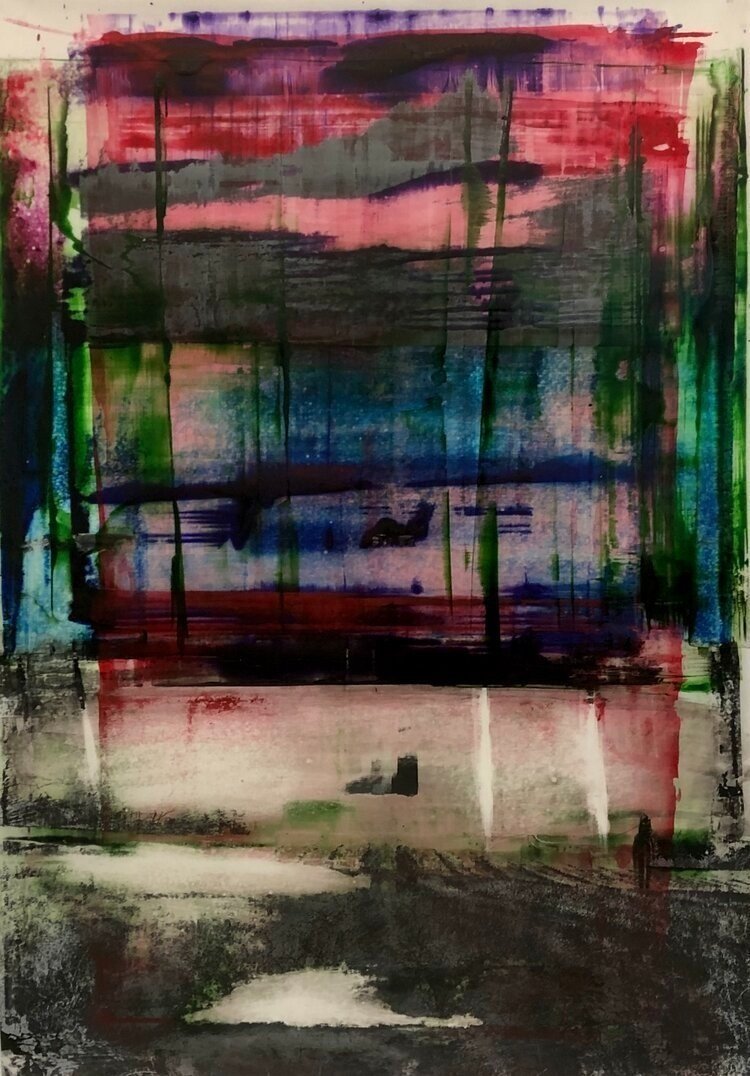
“Universe knows and forgives” by Yuko Adachi.
Adachi’s process stems from her understanding of the balance between taking the time to complete a piece and the technical elements that contribute to this process. However, there’s also a significant component that occurs through Adachi’s spirituality.
While some artists draw inspiration from their surroundings or travels, Adachi’s creations stem from the messages and visions she receives through meditation, channeling them into her mind and then onto paper or canvas.
Adachi explains how she started her path as an artist:
“High school was a pivotal time—those were the years I truly began tapping into my gifts. Looking back, I now realize that I was already channeling higher realms while creating abstract art, although I didn’t yet have the words for it. I would lose myself in the process, locking myself away for hours, completely immersed, asking my family not to disturb me. When I finished a piece, I remember feeling something sacred had taken place… something beyond me. I would look at my own work in awe, sometimes even moved to tears, unable to fully comprehend that I was the one who had created it. I felt so proud, mesmerized, and humbled at the same time. The energy of the art I created filled me with so much light. Now, I understand that what I was experiencing was Lightcode activation. I was serving as a vessel/channel for something far beyond my personal self.”
The process of “channeling” occurs when you are in a heightened spiritual state, allowing you to see visions and hear messages of what is appearing to you, including ideas, colors, shapes, and textures. It's like a dream, but you’re not necessarily dreaming. When channeling, you remember what is being seen and heard, and then share this information with the world in your own way, allowing people to receive the information they are meant to obtain.
One of the beauties of Adachi’s work is how intentional her pieces are. The themes can range from energetic protection to amplifying your own gifts to even our connection with the natural world. The artwork fosters a more profound sense of awareness of the seen and unseen as a human, and how these aspects assist us to become the best versions of ourselves and our fellow people on this planet.
Divine Connection

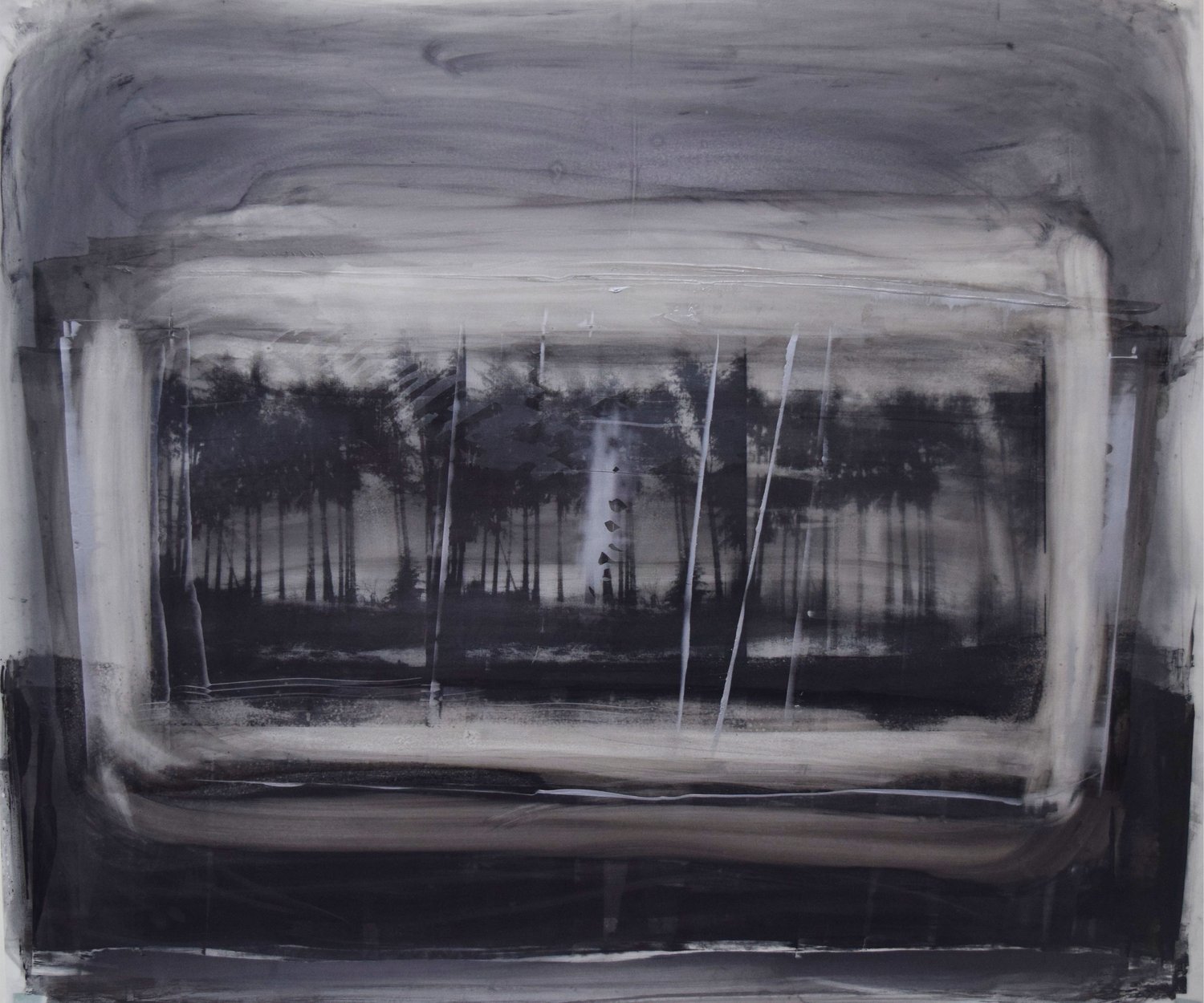
“infinite possibilities” by Yuko Adachi.
You will find that Adachi’s artwork connects to spiritual aspects that are part of the unseen world. Yet these aspects are meant to speak to the viewer about why they matter and the connection between what we see and what we do not. If there are aspects we do not yet see, then we should consider opening our minds to why these things matter.
She is an artist who sees what is within us and what is outside of us, particularly in terms of energy. It can be something as small as feeling inadequate to something bigger, like wanting to know your purpose in life, as both of these ideas are related to your own energetic power and relationship with a bigger force and calling. It is through her work that we can tap into those parts of ourselves that perhaps we hadn’t considered before, and how those parts interact with the universe through our own actions and the energy we carry within our bodies and auras, also known as energy fields. There is much fluidity to her painting technique, where even the smallest detail or texture has an intentional purpose behind it. There is a dance between the objects in her artwork, among themselves, through symbolic colors, and through symbols that are also hoping to stir something within you.
Adachi explains the connection to spirituality through her work:
“I love this question because, to me, art is spirituality. It is a divine tool. It is a visual medicine gifted by the Universe to help humanity express and communicate with the Divine. Art and spirituality are inseparable, just like the sky and the stars—one holds space, the other shines. As a Lightcode channel, I am fully aware of my ability and the cosmic responsibility that comes with it. In art school, we were asked to write an artist statement, and to this day, my core message remains the same—only my vocabulary has evolved to express it more clearly. “
Each piece has a strong sentiment behind it, prompting the viewer to consider how the artwork relates to its title. In “The Universe Knows and Forgives,” you see rich colors, as well as feathers, which can symbolize birds and angels; both beings are seen as messengers. But there’s also a watching eye overseeing the whole scene, and that can be seen as the all-knowing eye, or the eye of God, or the eye of the universe, which knows it all and sees it all. Yet the eye looks gentle and loving, as we imagine God to be, as a being who forgives our mistakes.
Symmetry

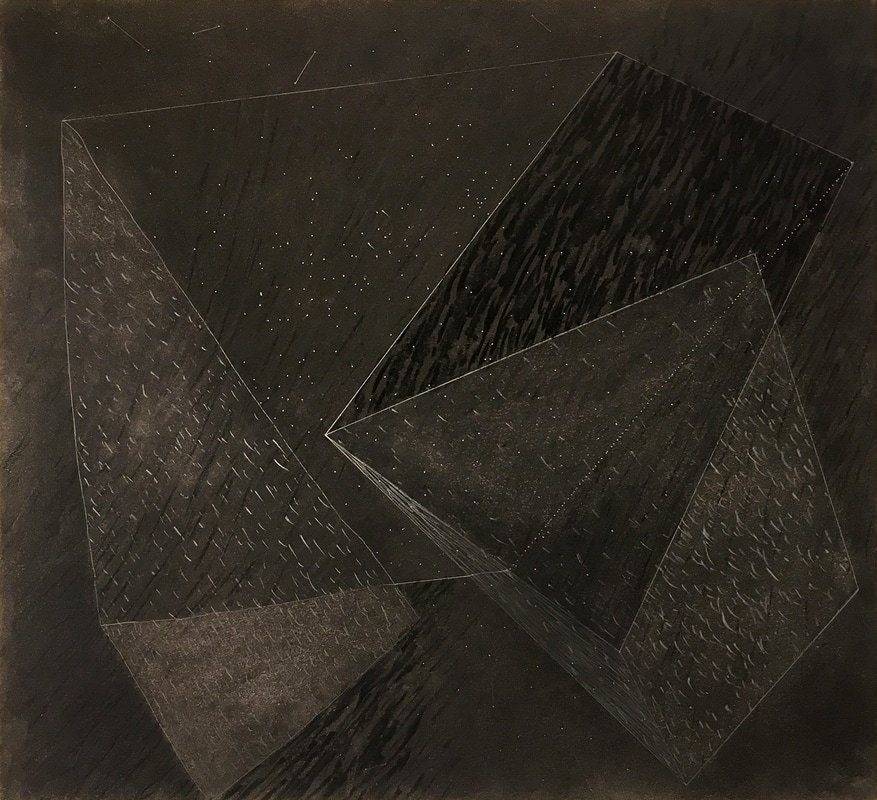
“Galactic rememberance” by Yuko Adachi.
The concept of “sacred geometry” is something that you encounter throughout Adachi’s work. It stems from a spiritual perspective that suggests God or a divine source creates through symmetry and geometrical shapes that are proportional and, of course, symmetrical. It allows things and energy to grow and expand in this way, as they are symbols of different energetic powers throughout the universe. For instance, the drawings known as “mandala,” which are prevalent in Hinduism and Buddhism, are geometrically derived with the purpose of showing focus on one point and then expanding outward from there.
Studies suggest that sacred geometry is a crucial component in the creation of our universe, particularly through the interplay of lines and space. There is an underlying focus on geometry within each of these sacred geometry pieces in Adachi’s work, where the way lines are connected and the types of shapes hold a specific spiritual meaning and message.
She says:
“I have always been a deeply spiritual artist, but a major turning point came in 2021, when I received a clear divine message: 'Bring Lightcode activation art to protect the homes of people on Earth.’ This was the first time I received a specific divinely assigned mission. In mid-2023, I completed Home Protection, a transmission encoded within sacred geometry to serve as an energetic activation and shield for those who welcome it into their life and their space. You can read more details about its cosmic transmission on my website—it’s a deeply powerful piece, not just for me but for those who feel called to receive its activation.”
Concluding Musings

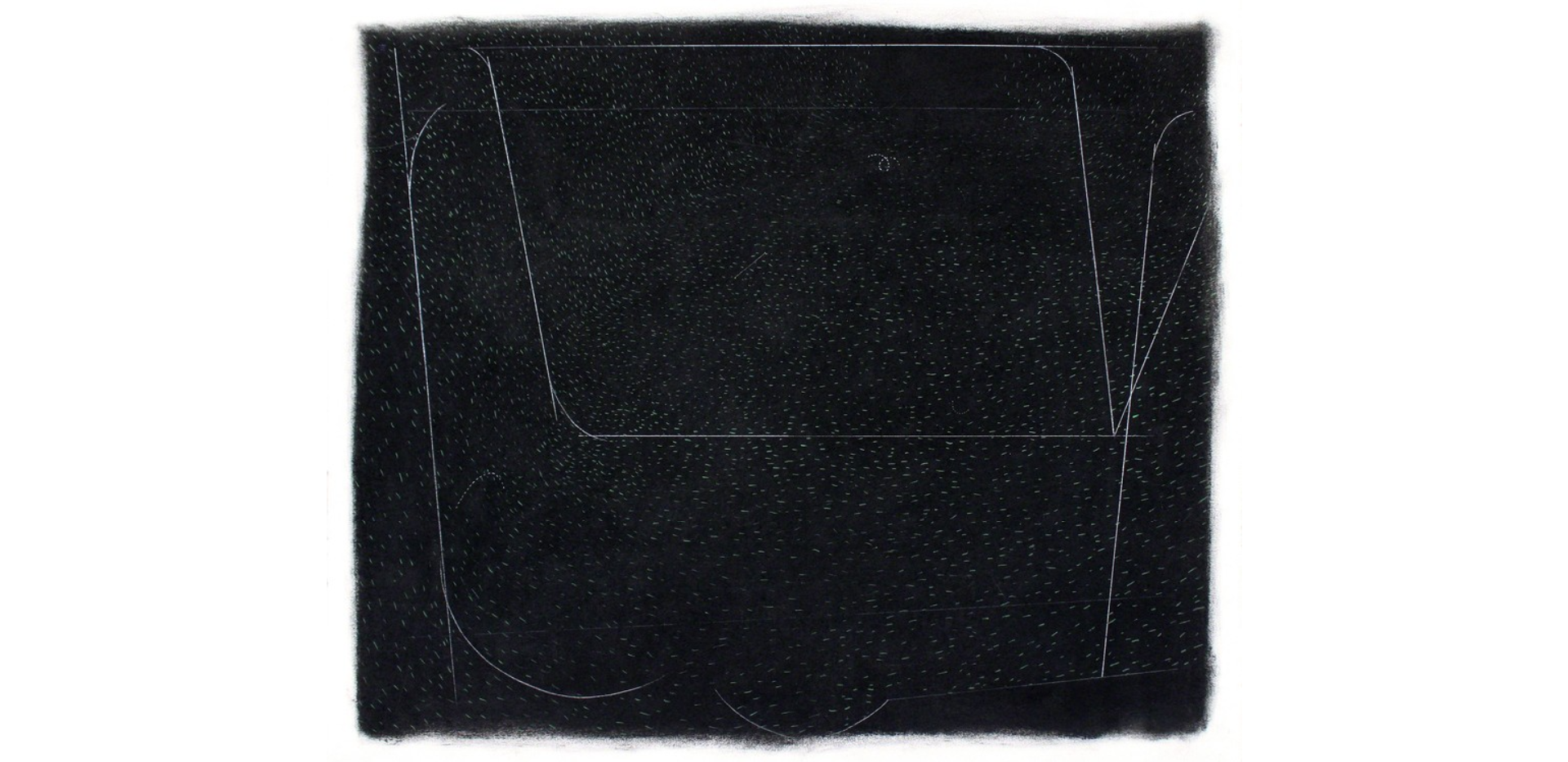
“Natural Selection II” by Yuko Adachi.
Adachi’s pieces are so much more than meets the aesthetic eye. They speak to us at a soul level with a higher power that we cannot see, but we do feel, even in unexpected moments throughout our lives, through sadness or small miraculous moments. We can believe that there are greater forces at play, and that is what Adachi’s artwork is here to reveal to us.
She speaks about the purpose of her artistic journey:
“Coming from an artistic background with a focus on healing and elevation, I find it deeply nourishing to balance my roles as both an artist and a shaman. Serving souls through energy healing and my deep connection to crystals is both fulfilling and joyful, while creating art is pure bliss—nourishing and healing for my own soul. I need both worlds to stay aligned and balanced and to fully honor my energetic calling. For visionary and clairvoyant artists who channel higher realms in service of the light, I feel that shamanic work is a natural extension of their gift. When you’re working with energy, stepping into sacred space, and channeling Lightcodes from cosmic consciousness, you are already”
There are layers to us and this world we live in. If we choose to delve deeper into our understanding of humanity and our personal journeys, we can uncover a wealth of knowledge and truth about the energy we hold at each moment. This is an important truth that helps shape our journey, but we can also gain a deeper understanding by connecting to this energy and making the most of it, becoming better humans each day. Our outer world will always be a reflection of our inner work and the forces we work with, and that is where Adachi’s work comes in as a reminder of these aspects and how we can learn to honor them and work with them.
For more on Yuko Adachi’s artwork, please visit her website.
Today’s poems reflect a need to feel centered, which comes from what we see in Yuko’s work:
A Center
By Ha Jin
You must hold your quiet center,
where you do what only you can do.
If others call you a maniac or a fool,
just let them wag their tongues.
If some praise your perseverance,
don't feel too happy about it—
only solitude is a lasting friend.
You must hold your distant center.
Don't move even if earth and heaven quake.
If others think you are insignificant,
that's because you haven't held on long enough.
As long as you stay put year after year,
eventually you will find a world
beginning to revolve around you.